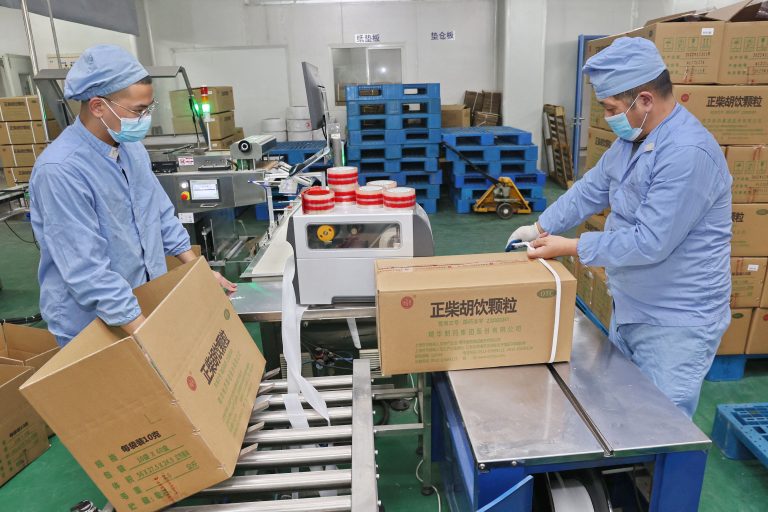
India and Japan concluded their second Economic Security Dialogue on May 11, agreeing to strengthen industrial and technological cooperation in five key areas: critical minerals, semiconductors, information and communications technology (ICT) including AI and telecom, clean energy, and pharmaceuticals.
“During the dialogue, both sides agreed on the need for closer public-private partnerships to protect economic interests with a view to building resilient supply chains, particularly in the current geopolitical context,” India’s Ministry of External Affairs said in a statement.
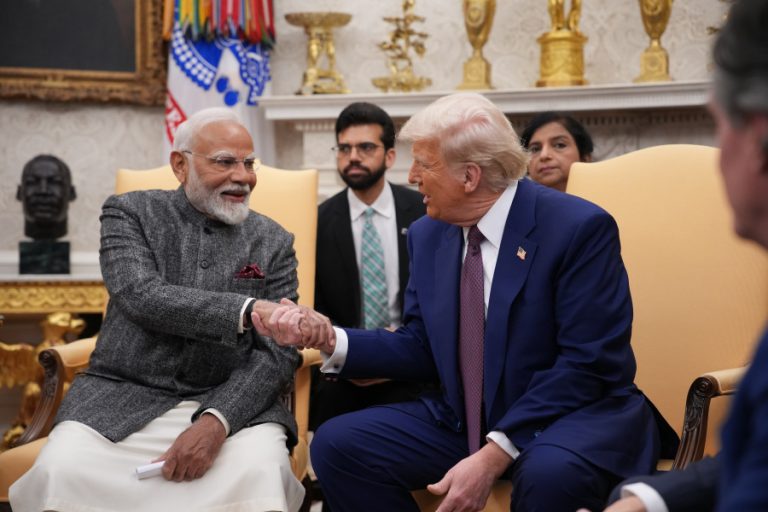
Indian analysts said the dialogue comes as countries such as India and Japan seek to strengthen economic security cooperation amid shifting global dynamics, including renewed engagement between the United States and China.
- Japan’s Expanded Role in Balikatan Drills Reflects Shift Toward Proactive Defense Orientation, Collaboration With Allies
- Trump Concludes China Trip as Xi Outlines ‘Four Stabilities’ in Bilateral Ties
- India Advances Its Civil Nuclear Program With Prototype Breeder Reactor
“Japan and India are now on a different trajectory. With the G2 summit just having been concluded [between the U.S. and China], the middle powers will join to support each other’s interests,” retired Vice Admiral Shekhar Sinha, former chief of India’s Integrated Defence Staff, told Vision Times.
The India-Japan Economic Security Dialogue was established following a bilateral summit in 2025 to promote cooperation in strategic industrial sectors. The latest round of talks was chaired by Indian Foreign Secretary Vikram Misri, Japanese Vice Foreign Minister Takehiro Funakoshi, and Japanese Vice Minister for International Affairs at the Ministry of Economy, Trade and Industry Takehiko Matsuo.
Success
You are now signed up for our newsletter
Success
Check your email to complete sign up
“The two sides shared views on economic security challenges facing both countries, including economic coercion, non-market policies and practices, and overproduction, as well as on their respective economic security policies,” Japan’s Foreign Ministry said in a statement regarding the dialogue.
As reported by Japanese outlet Nippon, Funakoshi also had a separate meeting with Indian officials to discuss Japanese Prime Minister Sanae Takaichi’s vision for a “Free and Open Indo-Pacific” framework, which Tokyo sees as central to expanding strategic cooperation with India.
“The two sides confirmed that they would further strengthen coordination toward realizing FOIP, including through the Japan-U.S.-Australia-India framework,” the ministry said.
Cooperation on critical minerals
Cooperation on critical minerals has become an increasingly important part of India-Japan ties since the two countries’ 15th annual summit in Tokyo in August 2025. The issue was again highlighted during last week’s economic security dialogue.
The Economic Times reported this March that Tokyo and New Delhi are exploring critical mineral reserves in Rajasthan as part of efforts to reduce dependence on Chinese supplies.
India has recently identified three hard rock rare earth deposits containing an estimated 1.29 million metric tons of rare earth oxides in Rajasthan and Gujarat.
Japan already operates a major rare earth venture in India through Toyota Tsusho’s subsidiary Toyotsu Rare Earths India in Andhra Pradesh. The project began in 2012 in partnership with Indian Rare Earths.
- Balikatan Military Drills ‘Directly Relate to a Potential Contingency Involving Taiwan,’ Experts Say
- Japan’s PM Takaichi Visits Vietnam and Australia, Stresses ‘Free and Open Indo-Pacific’ Amidst Iran Conflict
- India’s Yuan Payment for Iranian Oil Highlights Pragmatism, BRICS Push for Dollar Alternatives, Experts Say
Parul Bakshi of the Observer Research Foundation wrote last year that Indian industrial groups including JSW, Vedanta, and Adani are exploring partnerships with Japanese firms in battery technologies and minerals projects.
Rupal Kalebere, a New Delhi-based analyst focusing on Japan’s strategic ties in the Indo-Pacific, said cooperation on critical minerals has become a key pillar of India-Japan relations as China continues to dominate supply chains.
“Critical minerals are an essential part of the India-Japan technology partnership, especially as both countries deepen cooperation in semiconductors, ICT, batteries, and advanced manufacturing,” Kalebere told Vision Times.
According to Kalebere, the two countries have growing opportunities to cooperate on mineral security, recycling, processing, and supply chain resilience.
“This cooperation will be important not only for industrial growth, but also for long-term economic security,” she said.
Japan offers Mogami frigate co-production
After Japan’s cabinet revised restrictions on defense equipment and technology exports on April 21, Tokyo offered India the design, technology, and co-production of its Mogami-class frigate.
The proposed arrangement would allow the warship to be built in India using Japanese technology and materials.
“There has been strategic convergence, which is visible in Japan and India agreeing on joint defense platform production,” Sinha said.
He said the growing economic and strategic relationship between India and Japan is unfolding amid broader geopolitical shifts involving both Washington and Beijing.
Sinha described the evolving relationship between the United States and China as a “G2,” with the United States leading in military power and defense manufacturing, while China dominates global trade and manufacturing.
“Emerging technologies leadership is difficult to tell. Semiconductors will be with the U.S. and critical minerals with China,” Sinha said.
“That leaves middle powers like Japan, India, Australia, Vietnam, and Indonesia to coordinate and support each other without falling into any kind of grouping.”