According to CNN, China’s National Supercomputing Center in Tianjin has suffered a data breach of extraordinary scale. A hacker using the alias “FlamingChina” claims to have extracted roughly 10 petabytes of data — equivalent to about two billion photographs, or the entire text content of the internet several times over — from the facility, including classified defense documents and suspected missile design schematics. If confirmed, the theft would rank as the largest known data exfiltration from a Chinese institution. Cybersecurity experts who reviewed leaked samples say the breach appears genuine.
How hackers extracted 10 petabytes from a facility at the heart of China’s defense research network
The alleged breach was first disclosed on Feb. 6, 2026, when an anonymous Telegram account operating under the handle “FlamingChina” posted sample data files and announced the theft publicly. According to the poster, the stolen material spans multiple sensitive domains, including aerospace engineering, military research, nuclear fusion simulation, and bioinformatics. The data purportedly originated from some of China’s most sensitive institutions, among them the Aviation Industry Corporation of China, the country’s dominant state-owned aerospace and weapons manufacturer; the National University of Defense Technology, the military’s premier research university; and the Commercial Aircraft Corporation of China, the state-owned rival to Boeing and Airbus.
Multiple cybersecurity researchers have since reviewed the publicly available samples and reached similar conclusions: the breach appears to be real. The sample files included Chinese-language documents marked “Secret,” technical drawings, animated simulations, and schematics for defense equipment. Among the materials, according to researchers who examined them, were diagrams of bombs and missiles.
Dakota Cary, a China-focused analyst at the American cybersecurity firm SentinelOne, said the files were exactly what you’d expect to find on a supercomputing cluster of this type. He noted that the method of exfiltration suggested the hackers had exploited the center’s own architectural design rather than deploying any particular technical sophistication. Large volumes of data flowing in bulk to a single destination typically trigger network alerts, Cary explained; routing the transfer through multiple servers in smaller, distributed increments makes detection far harder.
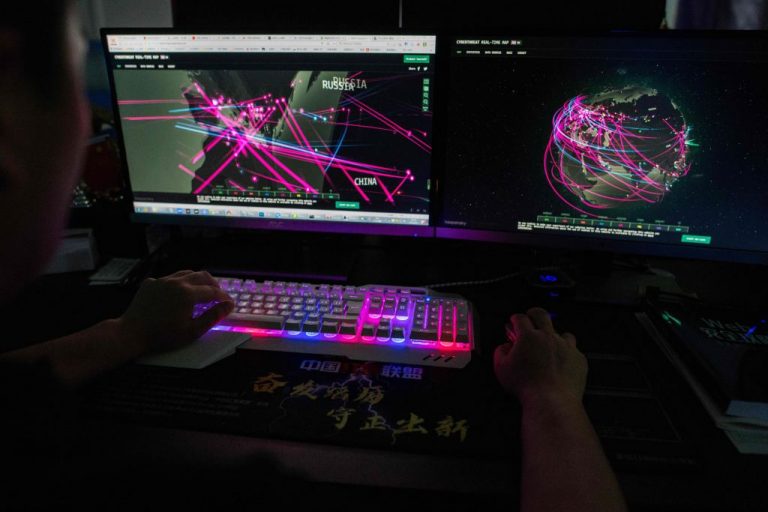
Security researcher Marc Hofer went further. He said he had made direct contact on Telegram with a person claiming to have participated in the intrusion, who described gaining entry through a compromised virtual private network endpoint and then deploying a botnet — a network of hijacked computers used to distribute the workload — across the facility’s systems. The data was extracted, downloaded, and stored over roughly six months, without, apparently, triggering a single alert.
Success
You are now signed up for our newsletter
Success
Check your email to complete sign up
Suspected missile blueprints and defense schematics among the stolen files
The Tianjin National Supercomputing Center provides computing power to more than 6,000 clients across China. Its systems run the kind of complex simulations and virtual testing environments used by both research institutions and defense contractors. That client list makes the center a uniquely tempting target: a single breach could yield data from dozens of sensitive programs simultaneously.
Hofer described the scale of the theft in terms that underscore its potential intelligence value. “Only they [state level actors] probably have the capacity to work through all this data and come back with something useful.” he said. The hackers, according to the individual Hofer contacted, were offering limited previews of the stolen data for a few thousand dollars in cryptocurrency, while full access to the complete dataset carried a price tag in the hundreds of thousands of dollars.
Even from the limited samples visible to outside researchers, the materials appeared to include highly classified defense equipment schematics and information relating to bombs and missiles. The full dataset is almost certainly richer and more sensitive still.
Overseas Chinese communities respond with derision and dark humor
The breach drew extensive commentary from Chinese-speaking communities abroad, most of it contemptuous. “They’re an incompetent operation and always will be,” wrote one commenter on X. Another called it “a great contribution to humanity” and said the news had left them “thrilled.” Several readers speculated that an insider had facilitated the theft, arguing that a 10-petabyte exfiltration could not have evaded detection without internal collaboration. “This much data movement would have set off alarms,” one user wrote. “Someone on the inside must have helped.”
Others drew pointed comparisons between the Party’s aggressive surveillance of ordinary citizens and its apparent failure to protect its own infrastructure. “The Party obsessively collects personal information on everyone, tracking everywhere you go and everything you do, but apparently can’t secure its own servers,” one commenter noted. Another suggested, sarcastically, that the crackdown on virtual private network use seen in China in recent weeks may have been triggered by this very breach, rather than by the officially stated reasons.
One commenter offered a sardonic theory about the origin of the theft: “My guess is that the supercomputer couldn’t make payroll, so they decided to sell the data on the dark web. They didn’t expect to land such a big client.”
There was also skepticism about the claimed scale. “Ten petabytes is an absurd figure,” one user wrote. “Even a few hundred terabytes would be hard to believe. If this is real, the problems inside the Party’s own institutions are far worse than anyone admits.”
By Li Deyan