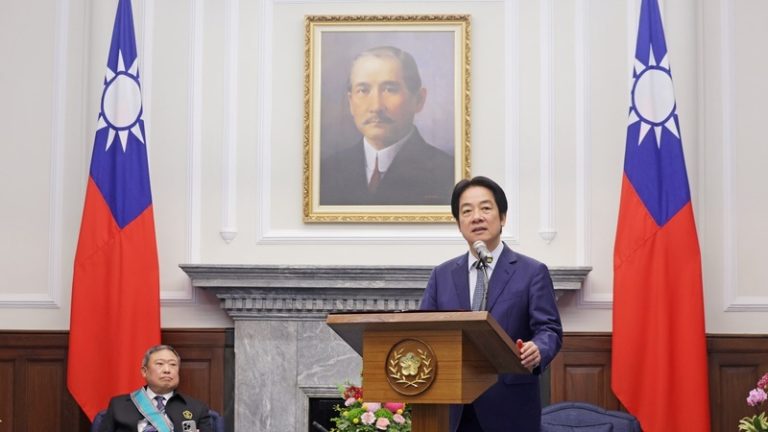
Taiwan is celebrating the 30th anniversary of its first direct presidential election, held in 1996 after decades of martial law and single-party rule. President Lai Ching-te used the occasion on March 14, 2026, to announce an eight-year special defense budget of approximately 1.25 trillion New Taiwan dollars (NTD) and to declare that Taiwan will never return to authoritarian rule, regardless of pressure from the Chinese Communist Party.
Speaking at a conference titled “30 Years of Taiwan’s Direct Presidential Elections and Democratic Resilience,” Lai said direct presidential elections carry three meanings for Taiwan. They embody popular sovereignty, giving the people the power to choose their own leader. They serve as a defining institutional milestone that strengthened the government’s legitimacy. And they demonstrate Taiwan’s achievement as a sovereign, self-governing nation.
Taiwan’s democracy was built through decades of social movements and political reform, Lai said, including the lifting of martial law, full parliamentary elections, and the first direct presidential vote in 1996.

Lai walked through Taiwan’s democratic history in his address: the Kaohsiung Incident of 1979, when pro-democracy activists were arrested and tried by military courts; the lifting of martial law in 1987 after 38 years; and the Wild Lily student movement of 1990, which pressured the government to accelerate reform.
He paid tribute to those who sacrificed for democratic transition and credited former President Lee Teng-hui for absorbing intense political pressure to push through the reforms that made direct elections possible.
Success
You are now signed up for our newsletter
Success
Check your email to complete sign up
Lai said Beijing combines military intimidation with united front tactics, legal warfare, and infiltration. Taiwan must strengthen both national security and social resilience to meet these overlapping threats.
The eight-year special defense budget totals approximately 1.25 trillion New Taiwan dollars (roughly $38 billion). The plan will upgrade defense capabilities, build what Lai called a “Shield of Taiwan,” integrate artificial intelligence into real-time defense systems, and promote domestic defense industries.
Democratic Taiwan is the product of decades of effort, Lai said. Regardless of external threats, Taiwan will hold to freedom and democracy and ensure the long-term security of its democratic system.
By Li Ming