By Li Jingyao, Vision Times
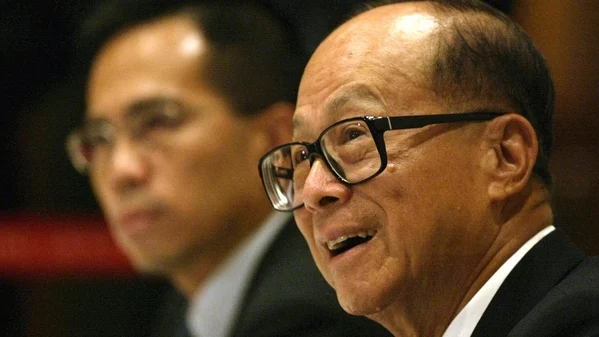
Hong Kong tycoon Li Ka-shing has once again been named the city’s richest man, according to Forbes’ newly released 2026 Hong Kong 50 Richest list — a ranking that comes amid heightened geopolitical scrutiny surrounding his company’s strategic assets abroad.
Forbes reported that CK Hutchison Holdings founder Li, now 96, holds an estimated net worth of $45.1 billion (approximately HK$352.5 billion), allowing him to retain the top position for another year.
Rising net worths
According to Hong Kong media outlet “Orange News,” 36 billionaires on the list saw their wealth increase this year. Li’s fortune grew significantly from $37.3 billion in 2025, an increase of $7.8 billion, largely driven by CK Hutchison’s stock price rising more than 60 percent year-on-year. The rankings from second through fourth place remained unchanged.
Second place went to the family of the late Henderson Land founder Lee Shau-kee, with sons Peter Lee and Martin Lee holding a combined fortune of $34.9 billion. Third was the family of New World Development chairman Henry Cheng, with $26.1 billion. Fourth was the family of the late Lee Kum Kee Group chairman Lee Man-tat, whose five children hold $17.6 billion. New World’s “Grandma Kwong” Kwong Siu-hing ranked fifth with $17.5 billion, rising one spot from last year.
Success
You are now signed up for our newsletter
Success
Check your email to complete sign up
RELATED: New Trade War: US Dials Up Pressure on Communist China With Tariffs, Heightened Rhetoric
Other notable figures included former Wharf chairman Woo Kwong-ching in sixth place, while Chinese Estates founder Joseph Lau dropped two positions to seventh with $14.3 billion. Alibaba chairman Joe Tsai ranked eighth with $14.2 billion, followed by Galaxy Entertainment’s Lui family, and private equity executive Jean Salata of EQT Asia in tenth place.
The biggest percentage gain belonged to the British-controlled Jardine Matheson Keswick family, whose wealth surged 60 percent to $4.6 billion, aided by major acquisition activity including the privatization of Mandarin Oriental International. A notable new entrant was the family of late shipping magnate Pao Yue-kong, with an estimated $5.7 billion. Forbes also noted that the Hang Seng Index has climbed nearly 30 percent since the last survey, and that the combined net worth of Hong Kong’s top 50 rose 22 percent, from $301 billion to $366 billion.
Panama cancels CK Hutchison
Li’s renewed position at the top suggests that his fortune has not yet been materially shaken by the Panama Canal port controversy now unfolding around CK Hutchison. According to Singapore’s Lianhe Zaobao, Panama’s Supreme Court ruled on Jan. 29, that the port contract held by CK Hutchison subsidiary Panama Ports Company (PPC) was unconstitutional. Danish shipping giant Maersk was temporarily assigned operational control of two ports.
CK Hutchison announced on Feb. 3 that PPC had initiated international arbitration proceedings against Panama. The ruling carries significant geopolitical implications, delivering what some analysts view as a strategic win for U.S. President Donald Trump’s security ambitions in the Western Hemisphere, while weakening the Chinese Communist Party’s influence in the region.
RELATED: Sino-US Rivalry Spills Beyond Trade as Trump–Xi Call Extends to Rare Earths, Panama Canal
Since U.S. President Donald Trump expressed determination during the 2024 election campaign to “take back” the Panama Canal from the CCP, control of canal-linked infrastructure has become increasingly politicized. In March of this year, CK Hutchison agreed to sell the canal ports and dozens of other assets for nearly $23 billion to a consortium led by U.S. investment firm BlackRock and Geneva-based Mediterranean Shipping Company.
Though CK Hutchison insisted the deal was commercial in nature, both the company and Li Ka-shing came under sharp criticism from Beijing. The transaction soon stalled, reportedly forcing CK Hutchison to seek the inclusion of a Chinese state-owned enterprise among the buyers. One potential participant was shipping giant COSCO.
However, the White House signaled it would not allow Chinese state-owned firms to gain access to port operations. The fate of the deal now remains uncertain. CK Hutchison has stated it will fight the ruling to the end. On February 4, the company confirmed that PPC had filed international arbitration against Panama after a court revoked its license to operate the two canal ports.
A strategic stronghold
The United States completed construction of the Panama Canal in 1941 and controlled it for decades. But in 1977, President Jimmy Carter signed treaties allowing Panama to assume control in 1999. Before the canal transfer — and before Hong Kong’s handover to China — Hutchison Whampoa (now part of CK Hutchison) obtained a 25-year contract to operate the two ports. Panama authorized an automatic 25-year renewal in June 2021.
American critics have long questioned whether allowing Li’s conglomerate to manage ports along the fastest shipping route between the U.S. East Coast and Asia was prudent. Yet in 1999, the U.S. State Department maintained there was no evidence “supporting the conclusion that the People’s Republic of China (Communist China) will be able to control canal operations.”
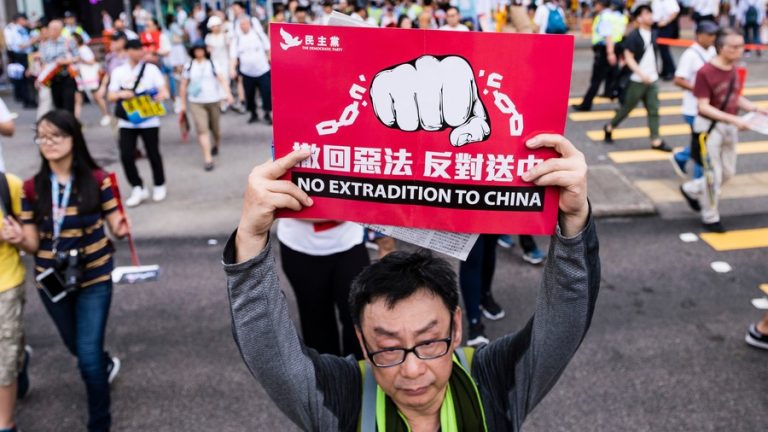
That assessment shifted dramatically after Hong Kong’s 2019 democracy protests and Beijing’s imposition of the National Security Law in 2020, which accelerated the decline of press freedom, free speech, and judicial independence.
As Hong Kong’s government increasingly aligned itself with Beijing, U.S. policy also changed. Trump’s first-term administration declared that Hong Kong “no longer has sufficient autonomy and therefore should not enjoy different treatment from mainland China.”