The Iran war and the AI boom are affecting global economies in different ways, creating new market trends and helping explain why Taiwan overtook India in stock market valuation last week, experts say.
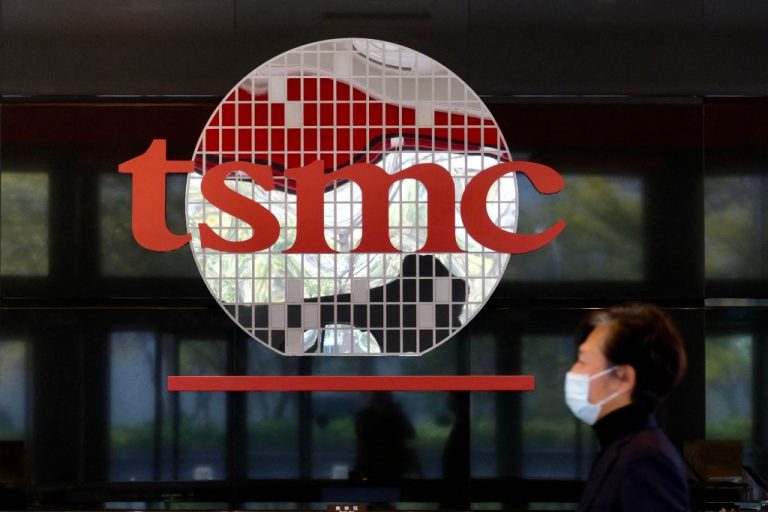
Driven by the rapid rise of global chipmaking giant Taiwan Semiconductor Manufacturing Company (TSMC), Taiwan’s stock market climbed to nearly US$4.95 trillion, surpassing India’s US$4.92 trillion market capitalization to become the world’s fifth-largest stock market, as reported by Bloomberg.
India has more listed companies, the world’s largest population, and its GDP at US$4 trillion is four times larger than that of Taiwan. Taiwan’s population is just 23 million — slightly smaller than that of Delhi, the urban conglomeration containing India’s capital.
Despite this, India’s financial market, weighed down by slower earnings growth and fewer AI-related investment opportunities, has been among the world’s weaker-performing equity markets this year.
Taiwan, meanwhile, has benefited from a booming semiconductor and AI ecosystem. Shares of TSMC — the world’s largest semiconductor foundry and Taiwan’s largest listed company — have risen 44 percent so far this year, making chip stocks account for 42 percent of the benchmark index of Taiwan’s stock exchange, Reuters reported, describing Taiwan as an outperformer and India as an underperformer.
Success
You are now signed up for our newsletter
Success
Check your email to complete sign up
The top four stock markets in the world by valuation remain the United States, China, Japan, and Hong Kong.
Geopolitical uncertainty and high-tech supply chains
Prof. Liu Fu-Kuo, director of the Taiwan Center for Security Studies at National Chengchi University in Taipei, told Vision Times that Taiwan sits at the center of the global high-tech supply chain and that its current growth trajectory is likely to continue.
The stock market rise “represents Taiwan’s current industrial highlight led by semiconductors and AI related industries driving economic growth momentum,” he said.
RELATED COVERAGE
- Quad Signals Renewed Momentum at New Delhi Meeting Amid Growing Competition With China
- US Delay of $14 Billion Taiwan Arms Package Raises Questions Over America’s Defense Capacity and China Strategy
- India, Japan Deepen Economic Security Ties With Focus on Semiconductors, Critical Minerals
“As global AI related hi-tech players are heavily invested in Taiwan to get much closer to advanced semiconductors, strong momentum reflected on the stock markets and exports performance will lead the market to boom further.”
The Taiwanese expert said India’s economy remains highly dependent on imported energy. India is the world’s second-largest energy importer after China, and soaring crude oil prices, disrupted maritime trade routes resulting from the Iran war, and a weakened currency have weighed on the country’s economy.
In India, IT-sector stocks have also declined amid concerns that AI-driven growth could disrupt the sector’s traditional business model, according to the Times of India.
“The unsolved Iran War has diminished hope of economic growth. I guess measures for recovering the confidence of international investors may not have been put on the government agenda,” he said.
“As FDI is always linked with the index of economic growth, it is critical for the government to put up extra incentives.”
The stock market valuation also reflects geopolitical trends and has further geopolitical repercussions according to experts who said while there are new opportunities, there’s also uncertainty and challenges for the economy both in India and Taiwan.
“India is the old way of growing. Taiwan forms a new world and way. We can’t afford to say that one will be more successful. Time alone will tell,” Dr. Alwyn Didar Singh, author and former Secretary to Government of India and the former Secretary General of India’s largest apex business chamber, Federation of Indian Chambers of Commerce and Industry (FCCI) told Vision Times.
For Taiwan, there are two sides to its growth story embedded in intense geopilitics–its economy concentrated on AI growth is promising not only to itself but also to the great power rivalry between the US and China. But there is also a flip side to it, according to Prof. Fu-Kuo..
“On the flip side, Taiwan’s industrial development and economic performance is over emphasized on semiconductors. For its traditional industrial sectors, unpredictable geopolitical situations are seriously challenging the foundation of Taiwan’s economy,” he said, adding that this is a major challenge before the Taiwanese government to achieve sustainable economic growth.
The Taiwanese expert said the island’s leadership in the global semiconductor sector will be unchallengeable in the foreseeable future and it weighs on the significance of Taiwan to international partners.
“With both the US and China envisioned to lead future industries, Taiwan’s hi-tech capacity becomes strategically critical,” he said.
Dr. Singh said the future economic growth and trends will be determined by the decisions taken today both in India and Taiwan.
“Geopolitics and political parties will have to decide on their future. It’s a tough call,” he said.
According to Times of India, despite Taiwan overtaking the Indian stock market, the latter remains significantly larger, valued at 4.15 trillion compared to Taiwan’s $977 billion.